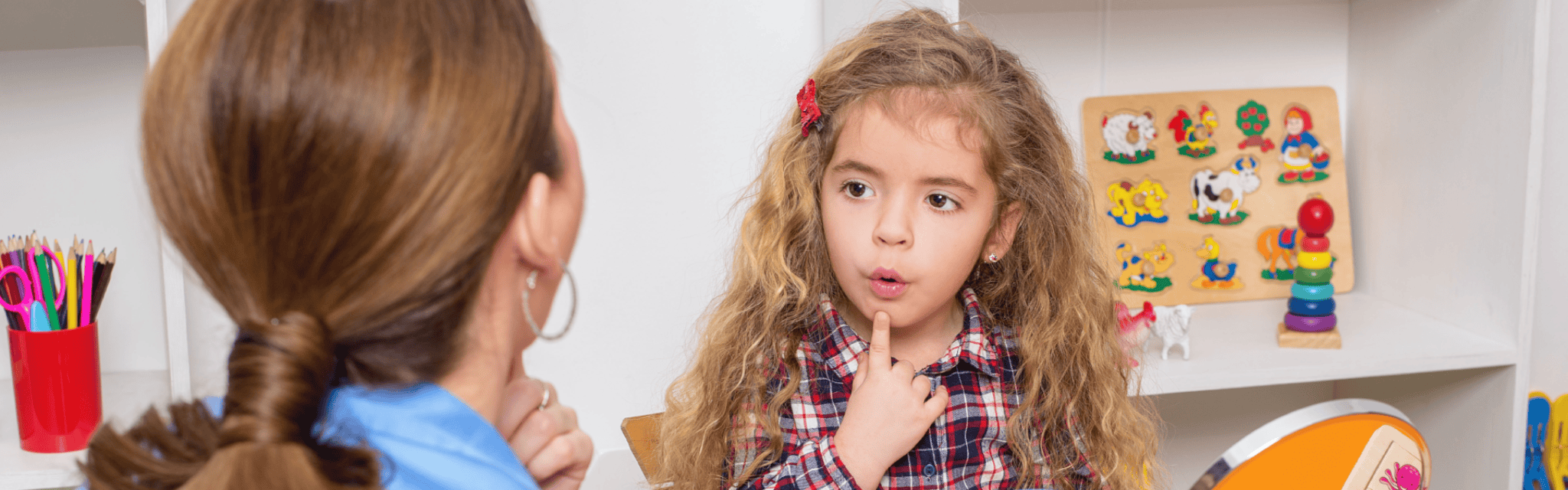
Speech Language Therapy That Helps Children Be Heard and Understood
Communication is how children connect, learn, and build relationships. When speech or language feels hard, it can affect confidence, learning, and everyday interactions.
Speech language therapy at The TEACH Group supports children as they develop the skills needed to understand others, express ideas, and communicate with confidence across settings.
Is your child struggling with organization, focus, and memory? Download our 10 activities to improve executive functioning and see your child thrive in school and at home!
Is Communication Frustrating Your Child?
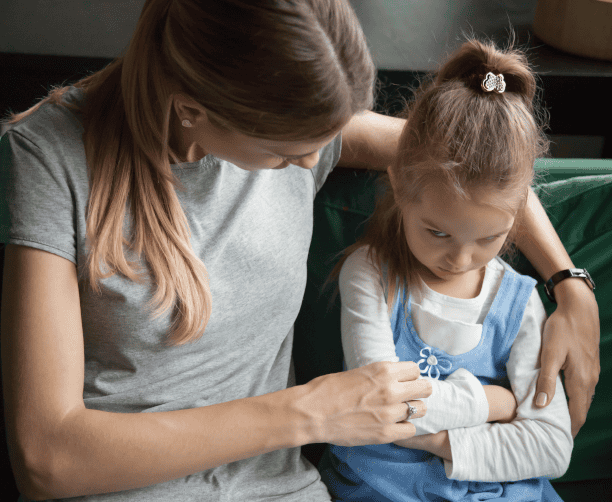
Some children struggle to say what they want or understand what others mean. Others speak clearly but find reading, social conversation, or emotional expression challenging.
These difficulties can show up as frustration, withdrawal, or behavior concerns. Parents often know something is off, but may not be sure what kind of support will help. They worry their child is falling behind or missing important developmental milestones.
The TEACH Group is here to help.
Speech Therapy Builds Speaking and Reading Skills
Speech language therapy turns communication challenges into opportunities for growth. By building skills for understanding, expression, and connection, children gain tools that make daily interactions less frustrating and more successful.
As communication improves, you’ll see increased confidence, stronger relationships, and smoother routines at home and school. You’ll have the relief of knowing your child has support that makes communication clearer, more comfortable, and more empowering over time.
Is your child struggling with organization, focus, and memory? Download our 10 activities to improve executive functioning and see your child thrive in school and at home!


Your Simple Pediatric Therapy Plan
Getting started does not have to feel overwhelming. We follow a clear and supportive process so you know exactly what to expect in your child’s journey.
01
Schedule an Evaluation
No pediatric therapy plan is one size fits all. We start by understanding your child’s unique strengths, challenges, and needs.
02
Create a Personalized Plan
Once we understand your child and family, we’ll help you build a customized therapy plan that meets your goals.
03
See Your Child Thrive
Through pediatric therapy, we help you meet your goals and give you the support you need. You’ll see your child thrive like never before.
How Our Speech Therapy Works
Developing Fluency
Fluency refers to the smooth and natural flow of speech. When speech is interrupted by repetitions, blocks, or prolongations, communication can feel effortful and frustrating.
Speech therapy for fluency focuses on helping children develop smoother speech patterns while also addressing thoughts and feelings related to speaking. Therapy supports confidence, comfort, and effective communication rather than forcing perfection.
Supporting Literacy
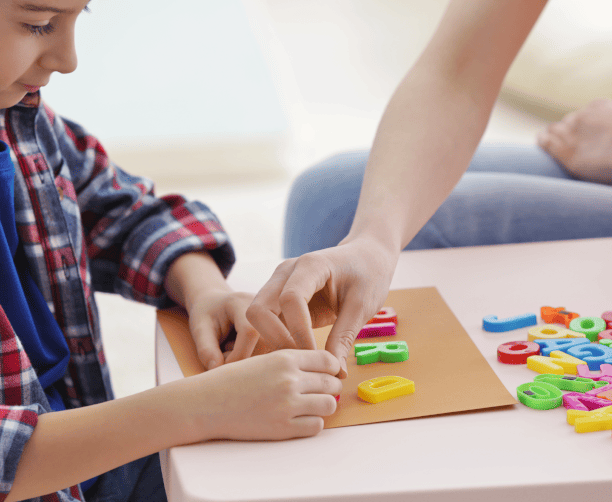
Literacy includes the ability to read, decode, and understand written language. Challenges in literacy may appear as slow reading, difficulty sounding out words, or trouble understanding what was read.
Speech language therapists assess underlying skills related to reading, such as sound awareness, decoding ability, and reading pace. Our customized speech therapy plans target these foundational skills to support reading accuracy, comprehension, and confidence over time.
Orton Gillingham Based Reading Support
The Orton Gillingham approach uses structured, multisensory instruction to support reading development. Learning is built gradually through repetition and clear phonetic rules.
Pediatric speech therapy emphasizes previously learned skills while introducing new concepts in a predictable way. This approach helps children feel successful as they practice reading with increased accuracy and fluency.
Developing Expressive and Receptive Language
Receptive language involves understanding what others say, including directions, questions, and nonverbal cues. Expressive language involves sharing thoughts, needs, and ideas clearly.
Speech therapy for children supports both understanding and expression through structured activities, modeling, and guided practice. Many children benefit from addressing both areas together to improve overall communication.
Speech Sound Development
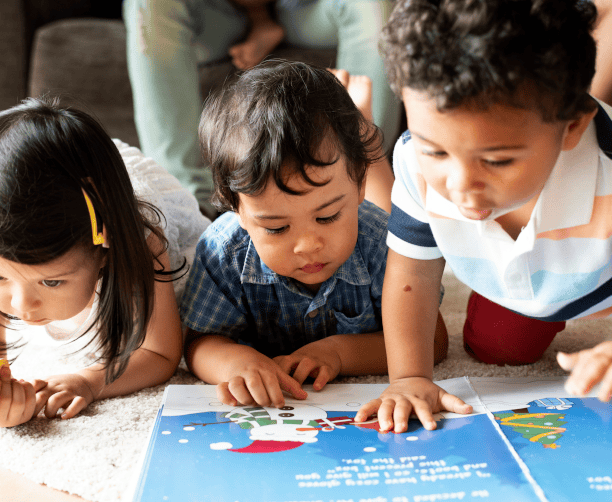
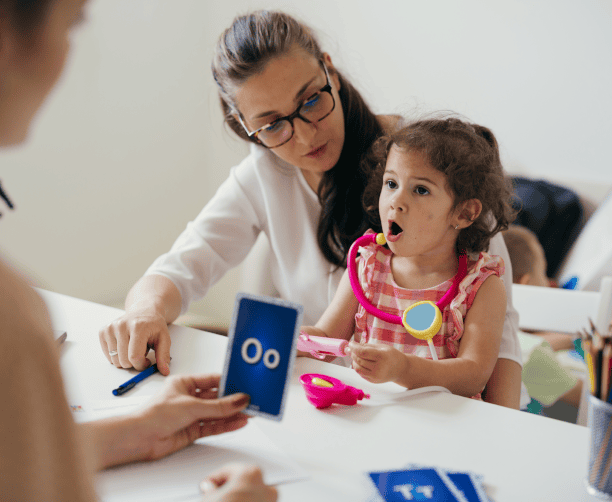
Speech sound challenges occur when children have difficulty producing sounds clearly or consistently. These difficulties may affect how well others understand them.
Our speech therapy program focuses on helping children learn correct sound production and develop awareness of mouth and facial movements. Support may also address more complex motor planning challenges that affect speech clarity.
Social Communication and SCERTS Based Support
Social communication includes using language to interact, build relationships, and navigate social situations. Some children struggle with understanding social rules, reading cues, or adjusting communication across settings.
Using a structured and supportive framework, SCERTS speech therapy focuses on social communication, emotional regulation, and meaningful interaction. Skills are taught intentionally to help children connect more comfortably with others.
PROMPT Speech Therapy
PROMPT is a tactile based approach that supports speech sound production through guided movement. Therapists provide physical cues to help children learn how to coordinate jaw, lip, and tongue movements.
This speech therapy approach reduces frustration by supporting the physical aspects of speech while using motivating activities to practice meaningful language. Our therapy programs are structured to build confidence and reduce cognitive load.
Augmentative and Alternative Communication (AAC)
AAC includes a range of tools and strategies that support communication when speech alone is not effective. These systems can supplement or temporarily replace spoken language.
Speech therapy helps identify and support the most appropriate AAC options, ranging from gestures and pictures to electronic communication systems. The goal is always effective communication and increased independence.


Social Use of Language
Social use of language focuses on understanding how communication works in everyday interactions. This includes taking turns, staying on topic, reading facial expressions, and adjusting language for different situations.
Advanced speech therapy provides direct teaching and practice of social rules, perspective taking, and conversational skills. Programs are individualized to help children form meaningful relationships and share ideas effectively.
Is your child struggling with organization, focus, and memory? Download our 10 activities to improve executive functioning and see your child thrive in school and at home!
Helpful Resources for Families
Building life skills requires support outside of therapy sessions. Many families benefit from additional guidance, tools, and practical strategies they can explore at their own pace.
Our resources page offers parent friendly information, helpful tips, and curated materials designed to support learning, organization, emotional regulation, and daily routines. These resources are intended to complement therapy and help families feel confident supporting progress at home and in everyday life.
Visit our resources page to explore tools and guidance that can support your child’s growth.
Start Building Your Child’s Speech Skills Today
Speech language therapy at The TEACH Group is individualized, supportive, and focused on real life communication.
By addressing speech, language, literacy, and social communication together, therapy helps children connect, learn, and participate more fully in daily life. Schedule an evaluation today and begin building communication skills that support confidence, learning, and connection.
Is your child struggling with organization, focus, and memory? Download our 10 activities to improve executive functioning and see your child thrive in school and at home!

Pediatric Therapy Designed to Support Growth
At The TEACH Group, we help children build skills step by step using evidence based pediatric therapies tailored to their needs.
Our services work together to support the whole child.

ABA Therapy
Applied behavior analysis helps children build communication, behavior, and social skills in supportive and structured ways.

Diagnostic Assessments
Our assessments provide clear insights to your child’s condition, guide therapy planning, and help you understand next steps.
Executive Functioning Program
This program helps children improve focus, organization, emotional control, and school readiness skills.

Occupational Therapy
Pediatric occupational therapy helps children develop sensory integration, fine motor skills, and daily living abilities.

Parent Coaching and Training
We support parents with practical strategies that fit their real life and daily routines.

Speech Language Therapy
Speech therapy supports language development, speech sound disorders, and social communication skills.

Summer Camps
Our Knoxville summer camps combine fun and therapy support in a structured, child friendly environment.
What Parents Are Saying
Hear from parents about their experience with pediatric therapy at The TEACH Group.
You Do Not Have to Navigate This Alone
If you are concerned about your child’s development, help is available. With the right pediatric therapy services, children can grow, learn, and thrive. Don’t continue to struggle alone and without support.
Schedule your child’s evaluation today to see how The TEACH Group can help with behavioral, cognitive, and social development.